Introduction and UNESCO's Mandate
Page 1
Yamousoukro and Seville Statement
Page 2
Origins and Executive Board Adoption
Pages 3 - 4
Launching the Programme: El Salvador and Roundtable
Pages 5 - 6 - 7
1993 General Conference
Page 8
National Projects
Pages 9 - 10
Programme Unit
Page 11
Toward a Global Scope
Pages 12 - 13
Transdisciplinary Project and Human Right to Peace
Pages 14 - 15 - 16
1997: A New Approach
Page 17
UN General Assembly Resolutions
Page 18
Resolution for International Year
Page 19
Declaration and Programme of Action
Pages 20 - 21
Resolution for International Decade
Pages 22 - 23
Training Programmes
Page 24
Global Movement
Pages 25 - 26
Publicity Campaign
Pages 27 - 28
Decentralized Network
Pages 29 - 30
Manifesto 2000
Page 31
Use of Internet: CPNN
Pages 32 - 33 - 34
Culture of Peace Decade 2001-2010
Pages 35 - 36 - 37
My books about the culture of peace
Page 38
United Nations High-Level Forums on the Culture of Peace
Page 39
The Luanda Biennale: Pan-African Forum for the Culture of Peace
Page 40
Latin American Leadership for the Culture of Peace
Page 41
It can be said that the greatest achievement so far towards a culture of peace was the a href="Manifesto 2000. It was signed by 75 million people throughout the world promising to promote a culture of peace in their daily lives.
Unfortunately, after Federico Mayor retired and the United States returned to UNESCO, the new UNESCO administration abandoned the culture of peace, including the Manifesto 2000 initiative.
In the decades since 2000 we have often thought about trying to repeat the success of the Manifesto 2000, but it has not been possible to do this through UNESCO or the United Nations because the United States continues to oppose the culture of peace and hold veto power. It would be necessary to use the power of the civil society instead.
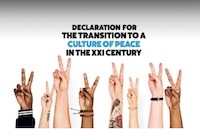
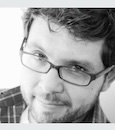
A first attempt in this regard was initiated by Roberto Mercadillo from Mexico (shown at right) with his Declaration for the Transition to a Culture of Peace in the XXI Century. The Declaration spells out in detail what is needed at every level of society and includes proposals for UN reform suggested by Federico Mayor, who endorsed the Declaration, as well as my own proposal for involvement in cities to make UN policy. The Declaration is too long to be disseminated simply.
In my monthly blog of July, 2024, I asked my readers for suggestions on how to re-launch the global movement for a culture of peace and I received 10 good replies, including one from David Hazen.
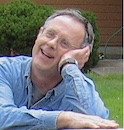
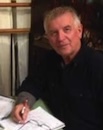 In my August blog, I came up with a proposal based on the suggestion from David Hazen and subsequent correspondence with him, and with the engagement of a third David, David Wick. We proposed taking up the Manifesto 2000 where it left off, renaming it the Manifesto 2025, gathering signatures once again and initiating action. Then, with the help of Fred Arment, the director of the International Cities of Peace, we prepared a course Activating a Culture of Peace that one can take for free. With the technical help of Dane Ramshhaw, we began to develop a means to disseminate the Manifesto on social media, hoping that it would become viral on social media.
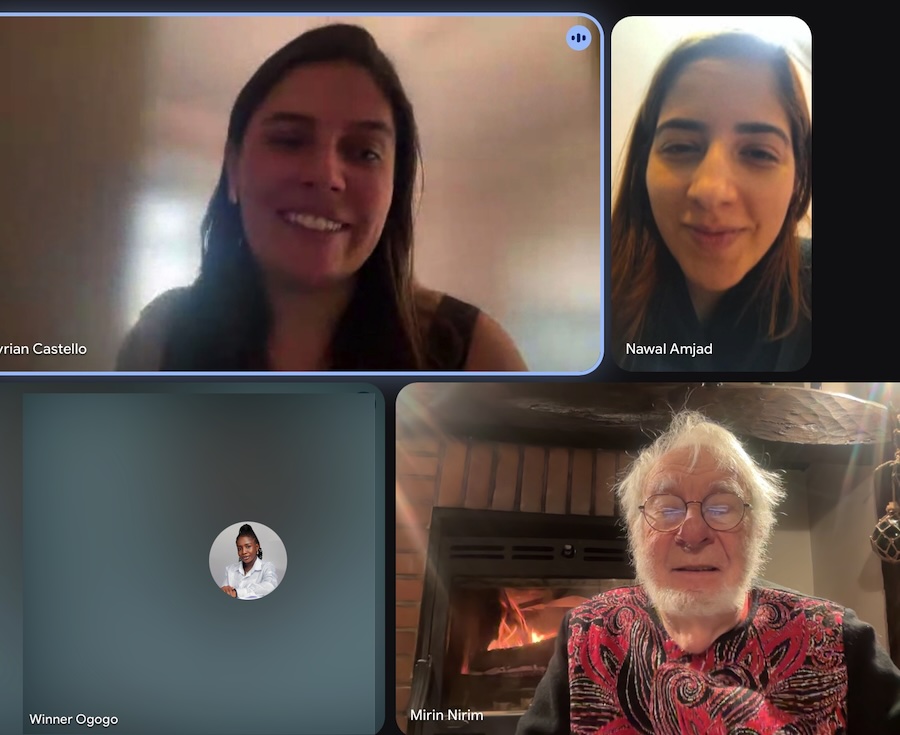
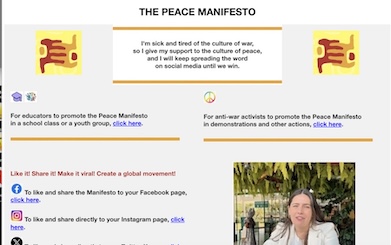
Over time the team to develop the Manifesto came to include younger members as we developed a website and tried to find effective ways to disseminate the Manifesto on social media. Here is a screen shot of the team meeting at the beginning of 2026. Myrian Castello is from Brazil. Nawal Ajmad is from Pakistan. Winner Ogogo is from Nigeria. Not shown is Alicia Cabezudo from Argentina and Colombia who takes part in most of our meetings and others who take part less often. On the right is an image of our website as of the beginning of 2026. Click on the left images to enlarge and the right image to go to our our website
During 2025 we debated whether the Manifesto should provide a definition of the culture of peace as was the case in the year 2000. Toh Swee Hin and his wife Virginia Cawagas, who were active members of our team at that time, wanted to make a version with an updated definition, while the rest of us decided to use a simple version as follows:
I'm sick and tired of the culture of war,
so I give my support to the culture of peace,
and I will keep spreading the word
on social media until we win.
With the help of many collaborators, I prepared versions of our website in 12 languages in addition to English.
With the engagement of Myrian and Nawal we established activatingpeace pages in all major social media and began to disseminate posts for the Manifesto. After many months the system failed to achieve a viral effect, so we developed a new strategy to establish activating teams of youth around the world to continually post the Manifesto. As of February 2026 this strategy is still under development.
 |
 |
 |